
 Treatment
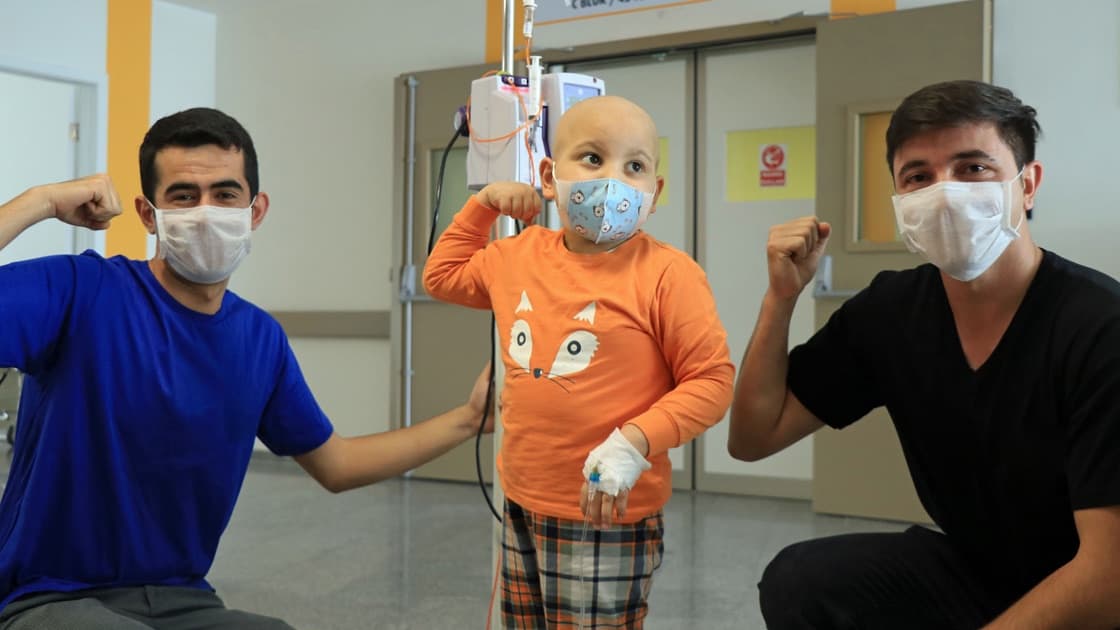
Young people who beat leukemia bring hope to patients
Two young men in Kayseri who developed leukemia in different years and completed treatment successfully now bring hope to children with leukemia and their families.
Read more

Treatment support
Go backA support programme that matches families who cannot cover treatment costs with donors. The social work unit assesses every application, the specific need is defined, and the donation goes directly towards it.
An application is made either through the social work unit of the hospital where the child is being treated, or directly through the foundation. The foundation's social worker meets the family; the treatment plan, the uncovered costs and the family's situation are assessed together. Approved needs are met from the donor pool, and payment goes directly to the pharmacy, the laboratory or the hospital.
No cash support is given; an invoice for every expense is kept on file and published collectively in the annual activity report. If a donor wishes, they can see what they supported and in which month it was used.
The programme covers only what the hospital does not and the family would otherwise pay out of pocket. Chief among these are medicines not reimbursed by social security, regular blood counts and imaging tests, blood product supply, and travel to the treatment centre. For children entering the transplant process, tissue typing and donor screening costs are met from the same pool.
For families coming from other cities, travel and accommodation are planned together with the foundation's family house programme, so no family ends up with two separate case files. Children who have to pause school during treatment are directed to the education support programme. The aim is for a family to reach all of its needs from a single point.
Every application is decided on the basis of an assessment report prepared by the foundation's social worker. The report covers the child's treatment plan, the family's income, the public support they already receive and the costs left uncovered. Assessment takes an average of five working days; cases with an urgent medication need are prioritised the same day.
Support continues throughout the child's treatment schedule and is reviewed every three months. The file closes when treatment is complete, though a family can apply again for test costs arising during follow-up. The point of this structure is to make the support a form of company that lasts from the beginning of treatment to the end, rather than a one-off grant.
The programme's operation is reviewed annually by an independent audit firm. The audit report is published on the foundation's website alongside the activity report and is sent separately to donors who request it.
01
Meeting the family and reviewing the treatment plan.
02
Defining medication, tests, blood products and travel costs.
03
Allocating funds from the donor pool to the specific need.
04
Institutional payment, invoicing and treatment follow-up.
For this project
For 2026 we aim to cover the medication and test costs of 84 children.
Target: ₺3,000,000
A programme matching families who cannot cover treatment costs with donors.
Our founders: the then Governor of Istanbul Nevzat Ayaz, Namık Şentürk, Sacide Ayaz and İhsan Şentürk; our first president, Prof. Dr. Gündüz Gedikoğlu.

Other projects
TreatmentTwo young men in Kayseri who developed leukemia in different years and completed treatment successfully now bring hope to children with leukemia and their families.
Read moreEventAs Bizim Lösemili Çocuklar Vakfı we visited Sarıyer Hamidiye Etfal Training and Research Hospital.
Read moreResearchA drug in clinical trials in the United States brought complete recovery to a third of the late-stage leukemia patients it was given to.
Read moreAccommodationWe share the annual review of the programme through which we take on the accommodation and travel burden of families coming from other cities.
Read morePsychosocialWorkshops prepared for children in treatment turn hospital rooms into classrooms and play areas.
Read moreAwarenessAt the stands we set up on university campuses, thousands of volunteers had tissue typing done and joined the donor pool.
Read more